Summer Sores in Horses – What Every Mid-South Horse Owner Should Know
If you own horses in Memphis or North Mississippi, you know that summer brings its share of issues. Heat arrives, the humidity climbs, and flies appear by the thousands. While most horse owners are prepared, one condition often catches people by surprise: summer sores.
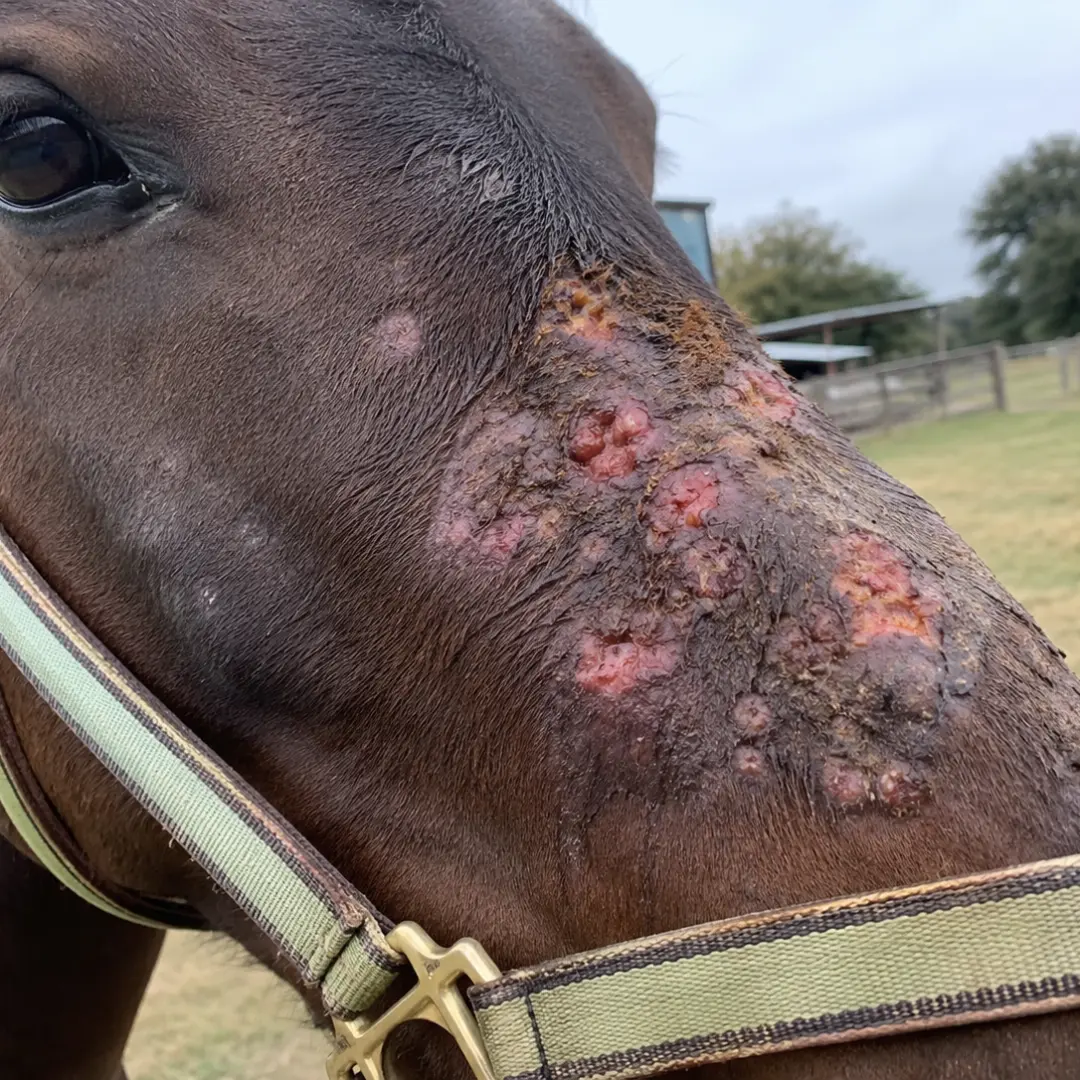
At first, a summer sore may look like nothing more than a small cut or scrape. Many horse owners assume their horse has developed proud flesh or reopened a wound. Unfortunately, summer sores are more than a stubborn injury, and without proper treatment, they can become larger, more painful, and difficult to manage.
What Are Summer Sores?
Summer sores (known medically as cutaneous habronemiasis) are caused by parasite larvae that are deposited into wounds by flies. Most horse owners are familiar with internal parasites and routine deworming schedules, but few realize that certain stomach worm larvae can create problems outside of the digestive tract.
How Summer Sores Develop
Flies carry larvae and deposit them on wounds, abrasions, or moist areas of the horse’s body. Once the larvae enter the skin, they cannot complete their normal development. Instead, the horse’s immune system launches an aggressive response against them, creating inflammation, irritation, and excessive tissue growth. What starts as a minor wound can quickly become a large, angry-looking lesion that refuses to heal.
Why the Mid-South Is High-Risk Territory
The Mid-South’s climate creates the perfect condition for summer sores. Warm temperatures and high humidity allow fly populations to thrive for much of the year. In many areas throughout Tennessee, Mississippi, and Arkansas, flies become active in early spring and remain a problem well into the fall. With horses spending more time outdoors and flies constantly moving from animal to animal, opportunities for summer sore development are everywhere.
Signs and Symptoms of Summer Sores
Many owners first notice a problem when a small wound begins behaving… differently. Instead of gradually shrinking and healing, the sore seems to grow larger. The tissue often appears raised, moist, and irritated. Some wounds develop excessive granulation tissue that resembles proud flesh, while others become itchy and inflamed. One of the hallmarks of a summer sore is its persistence. No matter what you seem to do, wounds refuse to improve, and in some cases may worsen.
Where Do the Sores Develop?
While the lower legs are among the most frequent sites for sores, they can develop almost anywhere. Commonly affected areas include:
- Lower limbs
- Around the eyes
- Lips and muzzle
- Sheath and prepuce
- Udder and belly
- Any area that becomes injured, irritated, or consistently moist
Some horses become extremely bothered by the lesions. The sores can be intensely itchy, causing horses to rub, stomp, or scratch the affected area. This additional trauma further delays healing and can create a cycle of irritation that becomes difficult to break.
Why Summer Sores Are Easy to Misdiagnose
One reason summer sores can be so frustrating is that they are often mistaken for other conditions. Proud flesh is perhaps the most common misdiagnosis, particularly when lesions develop on the lower limbs. They can take the appearance of early bacterial infections, fungal conditions, allergic reactions, or even skin tumors.
Because so many conditions can mimic summer sores, veterinary evaluation is important whenever a wound is not healing normally. An experienced equine veterinarian can often identify a summer sore based on its appearance, location, and the time of year. In some situations, a biopsy or deep skin scraping (which may reveal actual worm larvae) may be recommended to confirm the diagnosis and rule out more serious conditions.
Summer Sore Treatment
The good news is that summer sores are treatable. Make sure to address the underlying cause rather than just managing the wound.
Antiparasitic Treatment
Since parasite larvae trigger the inflammatory response, treatment centers on medications designed to eliminate those larvae. Your veterinarian will guide the right selection based on your horse’s individual situation.
Wound Management & Recurrence
Depending on the size and severity of the lesion, treatment may also involve:
- Anti-inflammatory medications(including corticosteroids): Calm the body’s immune response.
- Topical treatments: Promote healing and protect the wound from flies.
- Debridement: Remove excessive granulation tissue.
- Antibiotics: If secondary infection is present.
- Bandaging: Protects the site and prevents your horse from aggravating it.
Horses with advanced cases sometimes require more intense treatment routines, but many respond well when treatment starts early. The sooner a summer sore is recognized, the better the outcome tends to be. Horses that develop summer sores may be at a higher risk of recurrence. Ongoing parasite management and fly control are essential for horses with a history of summer sores.
How to Prevent Summer Sores
Fly Control
Good fly control is one of the most effective tools horse owners have for reducing the risk of summer sores. Make sure to manage manure regularly, reduce or eliminate standing water, use fly sprays or repellants (including masks, sheets, and boots), and always ensure your facilities and clean and well-ventilated.
Wound Care During Fly Season
Horse owners should pay close attention to even minor wounds during fly season. A small cut that might heal without issue during the winter can quickly become problematic during the summer months when flies are abundant. Prompt cleaning, proper wound care, and fly protection can often prevent complications before they begin.
When to Call Full Circle Equine
The most important takeaway is that if a wound doesn’t look right, don’t ignore it. A sore that continues growing, develops excessive tissue, becomes increasingly irritated, or refuses to heal deserves veterinary attention.
At Full Circle Equine, we see firsthand how quickly summer sores can develop during the long, hot summers of the Mid-South. As the temperatures rise and fly season gets underway, take a few extra moments to inspect your horse’s skin and monitor any wounds closely. Catching a sore in its early stages makes all the difference. If you feel your horse may have a summer sore, please reach out to our equine vet team.